One thing I love about being a researcher is the many rabbit holes you can go down, especially when you least expect it. In this blog, I wanted to give a brief overview of the RAF Comforts Committee, and some of the amazing ways in which those left at home contributed to the war effort in an incredibly practical way.
A bit of context as to how I came across the Comforts Committee first: among my colleagues, friends and family it is well-known that I love to knit. I started knitting whilst at University, where I was volunteering for the Greenwich Heritage Centre and working on a women in war project. I became fascinated by the beautiful patterns created by women to send to their loved ones, and decided that I’d like to go “full method actor” and learn to knit a pair of socks. Although I have still not completed a pair of socks, eight years later I genuinely could not imagine life without knitting. I try to do some knitting most days, and have knit various jumpers, accessories, blankets and even stuffed toys over the years. In fact, my lunch break is often spent working on my latest project!
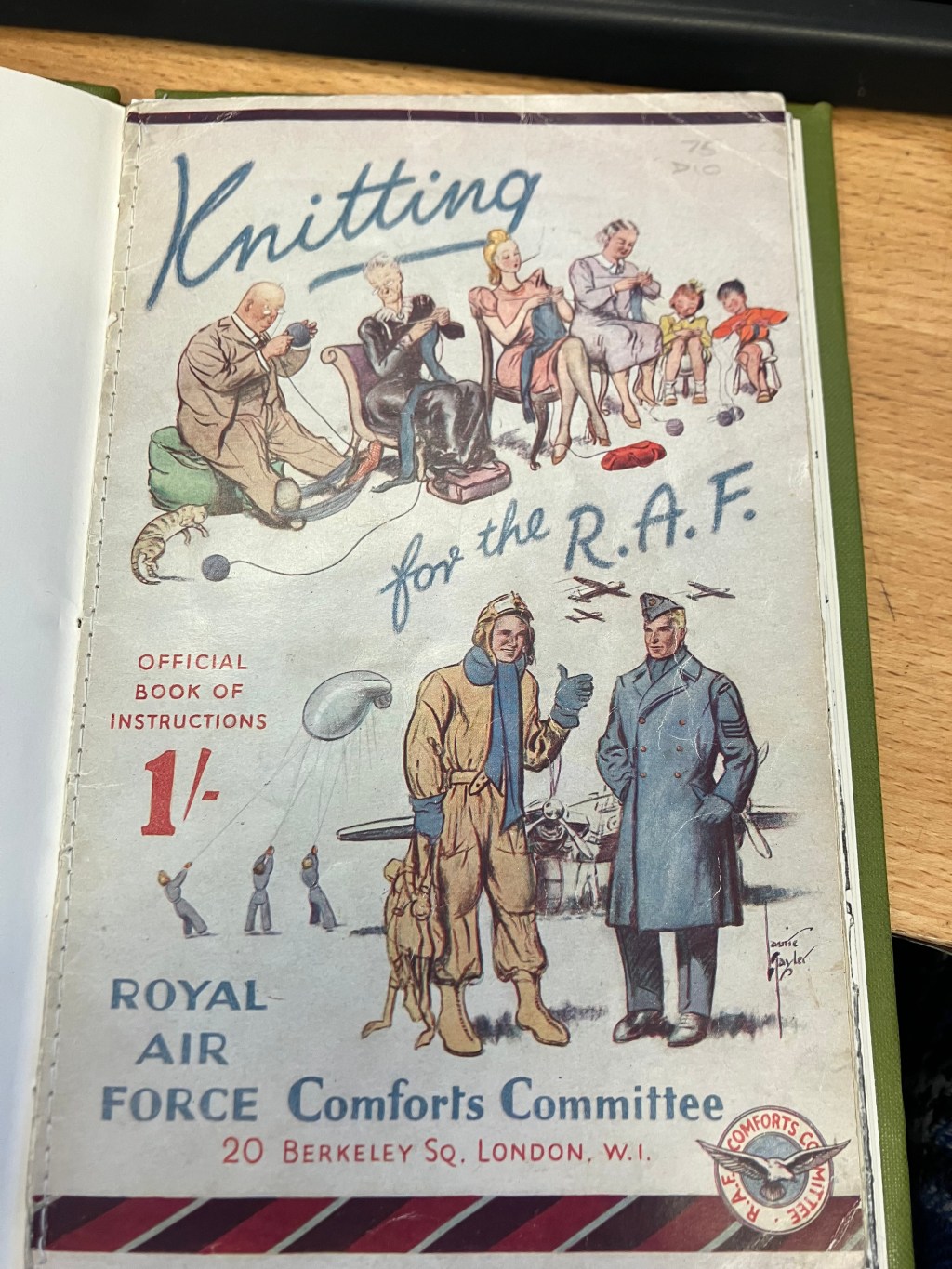
One of my dear colleagues particularly noticed this early on (shoutout to you Brian!) and knew that the RAF Museum had some items in its collection relating to knitting, so one lunchtime plopped a small book on my desk. It almost looked like a Ladybird book in terms of dimensions, but rather than telling me a story it had a wealth of information that has fascinated me since. Indeed, what he’d given me was a pattern book from the RAF Comforts Committee.

Who were the Comforts Committee?
At the outbreak of the Second World War, the British Armed Forces had a problem. The woollen items they were giving to troops, from balaclavas and gloves to the jumpers synonymous with (and still widely loathed by) the Armed Forces were not particularly warm and not fit for purpose. To combat this issue, in October 1939 various committees were set up to encourage volunteers to knit for the troops; the Air Council in particular set up the RAF Comforts Committee, whose role was to determine the type and quantities of “knitted comforts” required for the RAF as well as arrange for their collection, storage and distribution through their depots. Knitting these comforts was seen as a well-respected act of patriotism, and it also supported the “Make Do and Mend” attitudes that were popular at a time of rationing.
Knitting parties were largely organised by the Women’s Voluntary Service (WVS) and the Women’s Institute (WI), but anyone who could knit was welcome to join – including men. Once a group was registered, supplies of free wool would be sent out from the RAF Comforts Committee Head Office in Berkely Square. By April of 1943, between 6000 and 7000 knitted party groups were working across the country to create these garments; usually a knitter would receive 2lbs of wool and a pattern book to start with, and once the completed pattern was received by the Comforts Committee another 2lbs of wool would be sent to them. In total, almost 10 million woollen items were issued to RAF units, with over 1 million pounds of wool sent out to these knitting parties.
What did they knit with?
Initially, Prussian blue and grey wool was shared with those knitting for the RAF; this is because an excess of wool in these colours had been bought from the Germans after the First World War, when an excess amount of uniforms were purchased. However, by 1941 there was a shortage of wool in the colours needed for the ever-growing supply of items, so other colours were sent out. This included those that did not match the colours used by the Armed Forces.
Knitters could not just knit whatever they liked, however, and as shown by the item in the RAF Museum’s collection a standard book with approved patterns and instructions for knitting parties was shared. Moreover, labels for the garments were provided so that the knitter could include their address in their completed objects; this also created an opportuntiy for the recipient of the item to write back to the knitter to thank them for the item.
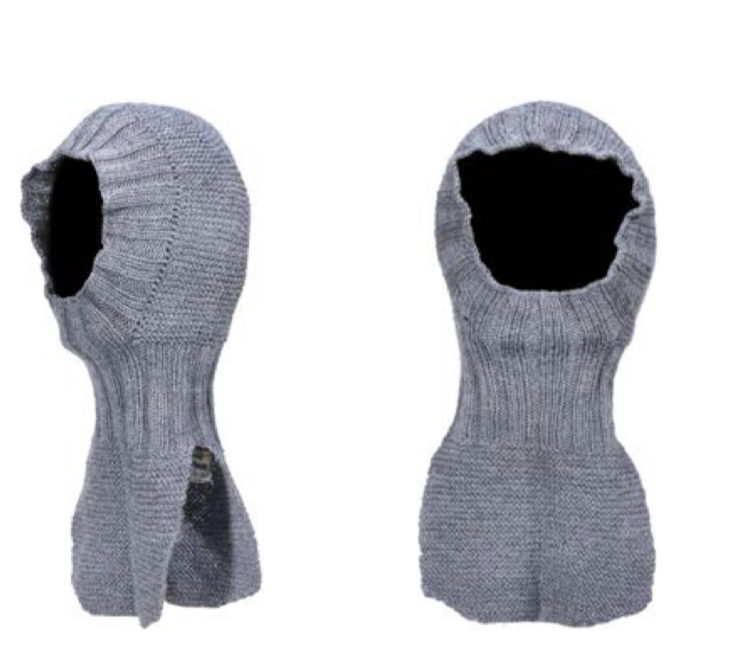
One example of such an item can be found in Hangar One of the London site at the RAF Museum, where you can see a knitted balaclava from 1941 on display as part of the many “hats” worn by the RAF over its first 100 years.
Recognition for the Workers
Although much of this work was done as an act of patriotism, it was acknowledged that thanks should be given to those who aided the war effort through the Comforts Committee. For each local committee registered, a badge would be sent by the RAF to them; they could request more badges once there was proof of over 100 hours of work completed by the worker, and in exchange for one shilling. Moreover, letters were received by those at the command level of the RAF thanking these volunteers for their service; ultimately, however, the payment for these individuals was knowing that their troops, including their loved ones, were being kept warm and safe thanks to their hard work.
Conclusion
That rounds up this week’s blog, I hope you found it interesting and are now keen to learn more about the Comforts Committee! I would love one day to recreate one of the patterns in the books – maybe that will be my goal over the next Christmas break!
Further Reading
Fairbain Lia, ‘A New Area of War: Knitting Needles in Action in Great Britain, 1939-1945′ [Unpublished BA Thesis, University of British Columbia, 2023].
Atlas Obsura/Anika Burgess, 26th July 2017, ‘The Wool Brigades of World War I, When Knitting was a Patriotic Duty.’ Available at: The Wool Brigades of World War I, When Knitting Was a Patriotic Duty – Atlas Obscura
Barrow Upon Soar Heritage Group, ‘Soldiers and Sailors Comforts Fund.’ Available at: https://barrowuponsoarheritage.org.uk/articles/soldiers-and-sailors-comforts-fund.html
Imperial War Museum, ‘Wigton Comforts Committee Memorial.’ Available at: Wigton Comforts Committee | War Imperial War Museums (iwm.org.uk)
‘RAF Comforts Committee Thank You Card.’ Available at: 1945-Dec-RAF-Comforts-Committee-Card-Kate-Jones.pdf (onesuffolk.net)
RAF Museum, ‘RAF Stories: Headgear.’ Available at: Headgear -.pdf (rafmuseum.org.uk)
Shinybees Podcast Episode 157, ‘The RAF Comforts Committee,’ 18th September 2020. Available at: Ep 157 – The RAF Comforts Committee – Shinybees
Tales from the Supply Depot, ‘RAF Comforts Committee Voluntary Worker’s Badge’ (27th January 2017). Available at: RAF Comfort’s Committee Voluntary Worker’s Badge – Tales from the Supply Depot
 Dr Megan Wang (née Kelleher)
Leave a comment